

The Art of Change: Shift Happens
5 November 2026 – Change requires more than just good intentions – it requires active change management! On 5 November, we will devote an entire day to exploring the topic of change.

Change initiatives often fail because people unconsciously talk past each other, avoid honesty, and shy away from conflict. Yet AI can be genuinely valuable in precisely these situations – not as a tool that designs presentations or writes minutes, but as a critical conversation partner that does not hesitate to raise uncomfortable issues.
At the change:maker event on 17 March, we explored what happens when AI is used as a critical discussion partner in change management. AI expert and trained change manager Dennis Preiter demonstrated – through creative, unusual and therefore strikingly effective real-world examples – how AI can reveal blind spots in analysis, communication and self-perception.
Artificial intelligence is here to stay. Anyone who believes they can simply ignore the reality of the AI-driven wave of change will sooner or later be left behind. AI does not stop at change management – quite the opposite. AI makes effective change management more important than ever. When used deliberately, it can streamline transformation processes and eliminate misunderstandings before they arise. But the goal is not merely to explore how we can use AI in change management. We must also recognise that AI itself *is* change.
For decades, the same stumbling blocks have repeatedly slowed down change projects:
AI can change this by acting as a tool that forces us to look at certain issues differently and to rethink our assumptions. Simply giving every employee an AI licence and assuming the matter is settled is not enough. That is not an introduction – it is infrastructure. AI continuously changes how people collaborate. As a result, traditional project logic does not apply. Introducing AI in an organisation is neither a one‑off project nor a purely IT initiative. It is a change project in its own right – one that will never be fully completed and requires ongoing attention.
AI is no replacement for judgement and it does not have a human mind – although it can be surprisingly good at pretending it does. Still, it can accelerate up to 80% of routine tasks and highlight gaps in a project. It responds quickly, precisely, and – if desired – directly. This opens up perspectives that often remain undiscovered in classic workshops.
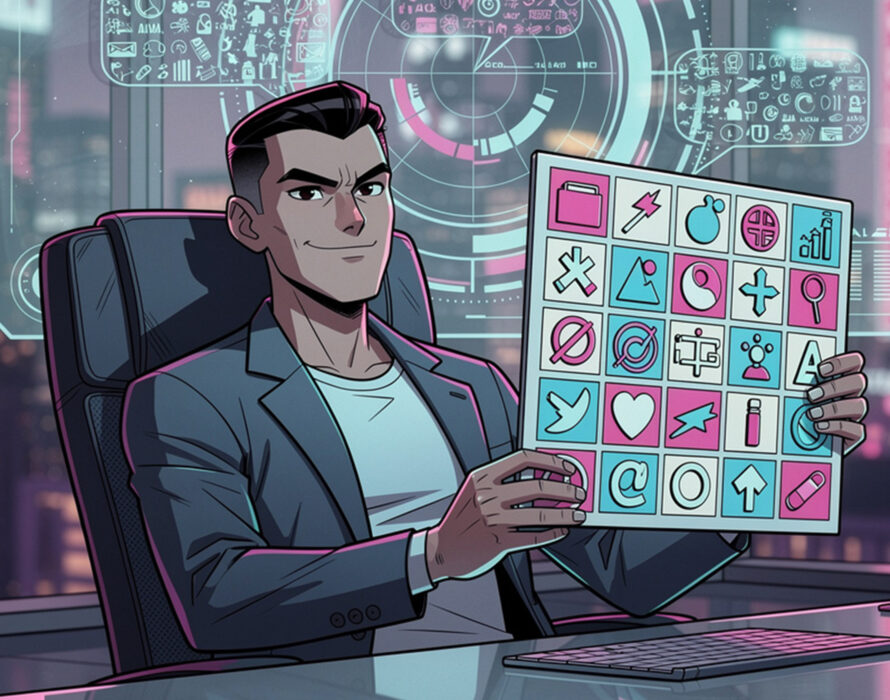



AI is not just another tool in the change management toolbox. It is the change itself and fundamentally reshapes the rules of the game. The following examples show how we can use this to our advantage.
Things get even sharper here: Thomas Weidemann is a highly critical, direct and persistent conversation partner. Unlike other prompts, he must actually be called so you can explain a change topic to him – and he does not mince his words. Mispronouncing his name can make the conversation noticeably more uncomfortable.
Programming AI to realistically simulate personalities or roles can be extremely useful. Employees – and leaders – can practise difficult conversations before having them in real life. This creates valuable learning opportunities without real‑world consequences.
The browser-based Change Architect Game allows you to simulate change measures, allocate budgets and observe stakeholder reactions. Processes can be questioned and optimised in a playful way. The game includes scenarios such as digital transformation, cultural change or crisis mode, and difficulty levels ranging from tailwind to full‑blown shitstorm. AI then evaluates the impact of the chosen actions.
Such simulations can now be created within hours, even without programming skills. They provide a safe environment for experimenting with “out of the box” ideas – and could eventually be combined with real data.

The discussion at the event showed how diverse attitudes towards AI in change management are. Participants rightly highlighted the need for responsible use and careful handling of real data. Dennis Preiter agreed but emphasised that AI is already widely used – and those who do not keep up will quickly fall behind.
Another common question: How can AI be introduced in organisations where target groups have very different skill levels? The answer: AI adoption is always a change process and requires action on three levels – leadership, technology and system. Leaders must create momentum and support skills development. Technology must be well implemented and flexible. And the organisational system – the environment, context and culture – must be understood and included. Early success stories are crucial, making pilot projects a strong starting point.
There was also discussion around what truly makes sense in change management. The challenge lies in setting up prompts cleanly and avoiding limitless experimentation. A strategic approach and a clear starting point are essential. At the same time, introducing AI is itself a change that requires transparent communication. Personal dialogue therefore remains central – and the hope is that AI will free up more time for exactly this.
As the discussion broadened, a bigger picture emerged. AI is here to stay, and it can create space for work that truly matters. One participant spoke of “becoming”: change not as a journey with a clear start and end, but as an ongoing transition. Andrea Cerny described change as something that comes in waves rather than ending abruptly like a classic project. Dennis Preiter referred to “AI fluency”, noting that we live in a time where change never stops – and AI accelerates it. In fact, we are in a “multidimensional multi‑transformation”.
AI will not replace us, but it will challenge us. We must integrate it consciously and actively into our change projects. And we must recognise that AI implementation is not self‑running – it is a change project in its own right.
Used intentionally, AI makes blind spots visible, speeds up work processes and frees time for what too often gets neglected: attentive leadership, meaningful dialogue and a focus on people. Importantly, AI is only as good as the prompts we provide. Vague instructions lead to vague results. Using AI requires time and care. The investment may not pay off for one‑off tasks, but it absolutely does for recurring ones.

5 November 2026 – Change requires more than just good intentions – it requires active change management! On 5 November, we will devote an entire day to exploring the topic of change.
We regularly send you news on the topics of project, process, change and agile management.