
AI in Project Management: Insights from the PM-Summit 2025 in Hamburg
15. January 2026
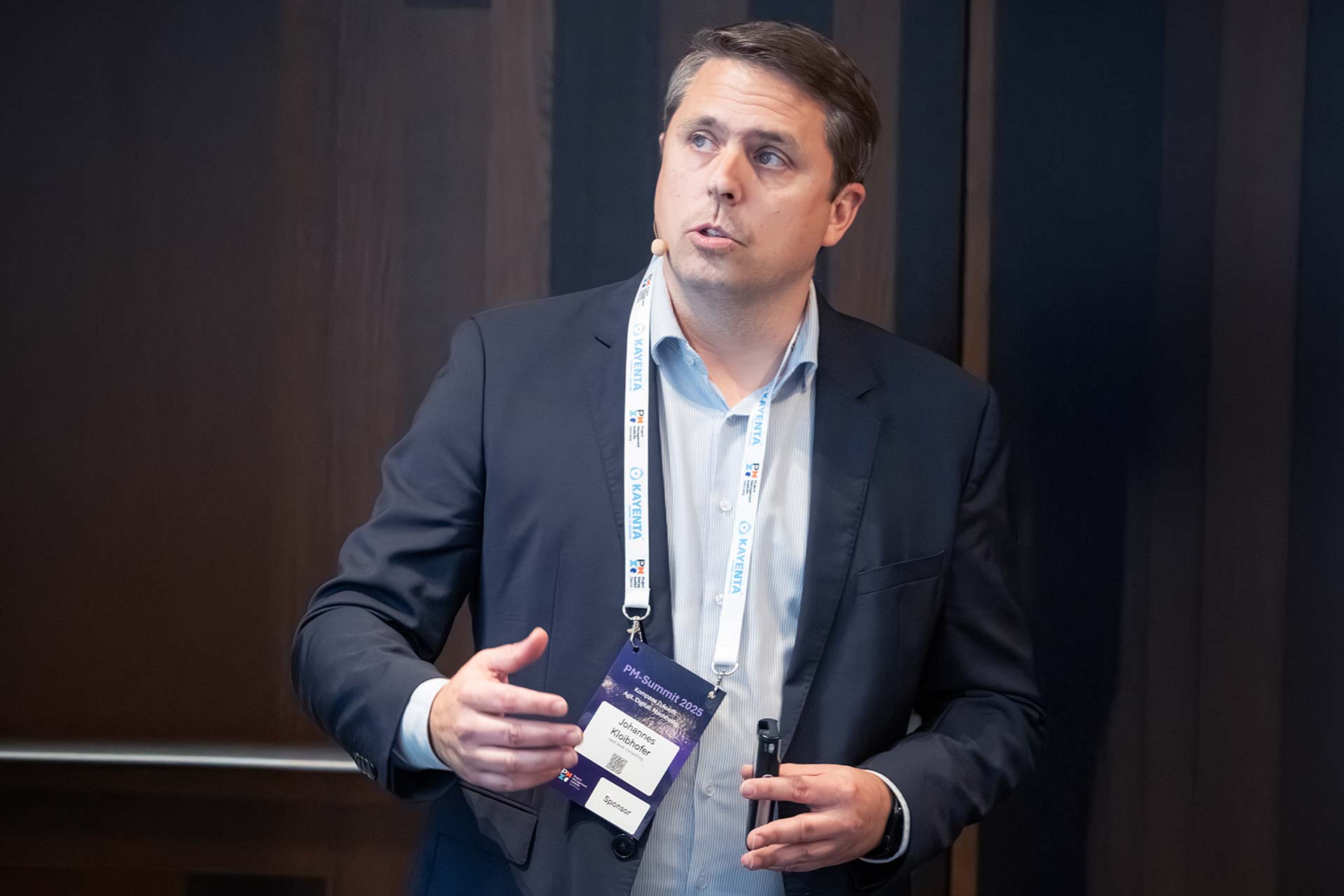
The PM-Summit is the annual highlight of the German-speaking project management community. From November 10 to 12, 2025, around 300 project managers, project experts, and portfolio managers gathered at the Empire Riverside Hotel in Hamburg to discuss current trends, challenges, and future topics—joined by our AI expert Johannes Kloibhofer.
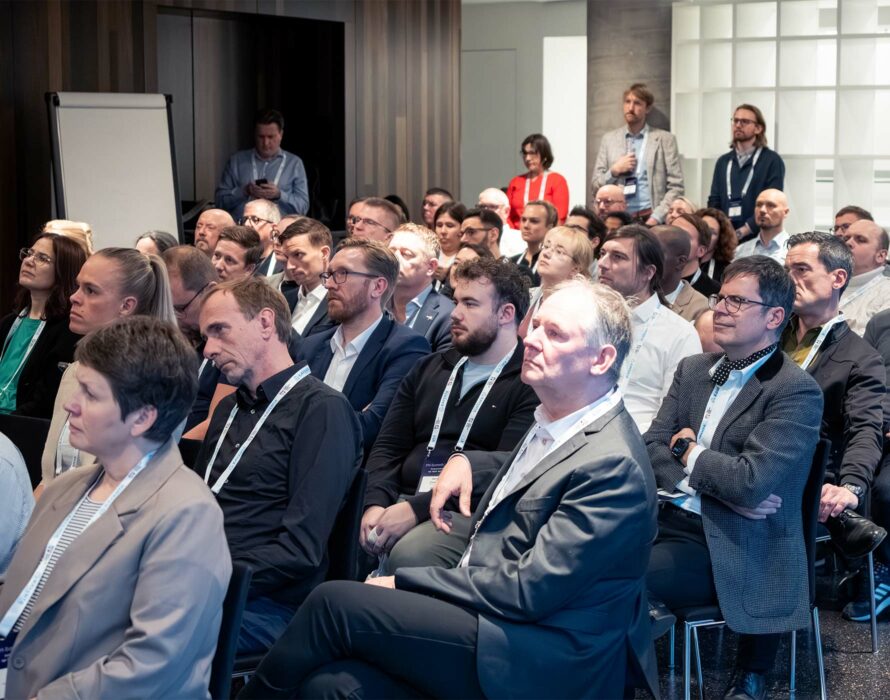
When nearly 100 people pour into a room designed for a maximum of 100, the topic is clearly more than just interesting. At the PM-Summit 2025 in Hamburg, our assumption was confirmed: artificial intelligence in project management is of particular relevance to the community. Representing next level consulting, our AI expert Johannes Kloibhofer was right in the middle of it and took the stage as a speaker himself.
The central question in the room
“AI in Project Management: Gamechanger or Hype?” was the title of Johannes’ presentation. Looking back, however, another question seemed to resonate as well: “Can we use artificial intelligence meaningfully in project management—and if so, how?” Experts across industries are currently grappling with this topic. Judging by the response in the packed room, people don’t want theoretical visions of the future—they want practical answers and actionable guidance.
During his thirty-minute presentation, Johannes shared insights from numerous consulting engagements, training sessions, and discussions with project leaders. His focus was a concise and realistic overview of the current state of AI use in projects: What has proven effective in practice? Where does AI create real value? And where are the limits we cannot yet overcome—whether technically, culturally, or organizationally?
The subsequent Q&A session highlighted that many organizations are currently at the same point. They recognize the potential of artificial intelligence but are unsure what the first step should look like.
“How can we even begin exploring AI automation and agents?” This question was on many participants’ minds. Johannes made it clear that while AI agents are powerful tools, success depends on balancing technological potential with human oversight. AI agents can take over tasks like data analysis, resource optimization, and task tracking—but they cannot assume human responsibility. Humans will continue focusing on what machines (still) cannot do: creating meaning, setting strategic priorities, and managing stakeholder relationships with sensitivity. Ultimately, people remain the decisive factor—responsibly applying and evolving technology.
Another key question concerned implementation within organizations and how companies can prepare for these changes. But there are no universal solutions. Each organization needs an approach tailored to its culture, structure, and experience with AI—especially considering that AI reshapes workflows, roles, and sometimes collaboration itself.
Looking beyond the project management lens
Alongside deep dives into project management topics, the PM-Summit in Hamburg also featured keynotes that demonstrated the broader context in which project work operates today.
Prof. Dr. Carlo Masala guided the audience through the world of geopolitics and its direct impact on German companies. He spoke about global crises, the rising importance of the BRICS countries (Brazil, Russia, India, China, South Africa), and shifts in economic power structures. He explained how increased cooperation among these states is reshaping both the global economy and political dynamics—affecting German companies in areas such as trade, investment, and supply chains. These developments must be understood and considered to deliver resilient and successful projects.
Entrepreneur, investor, and author Tijen Onaran spoke about the importance of diverse networks. Using best-practice examples from her own projects, she demonstrated how heterogeneous teams and broad online communities act as engines of innovation. She emphasized that building and nurturing strategic network structures is not a side topic—it is a critical success factor for unlocking creative synergies and advancing digital business models.
Key Takeaways: What we’re bringing home from the PM-Summit 2025
- AI has arrived in project practice, but its integration requires not only organizational preparation—it demands structured change management. Leaders must actively foster openness to change and involve employees through clear communication, training, and participation.
- There is no standard solution for implementing AI. Every organization needs an approach tailored to its specific context.
- Project management must keep the bigger picture in view—from geopolitical shifts to the possibilities offered by strategic networks.
- The key question for organizations today is: How can humans and machines work together to achieve even better results?
Take Action Now – From Theory to Practice
next AI Sandbox: In our in-house sandbox, you can experiment with AI agents risk-free and develop use cases—no technical expertise required and no risk involved.
next AI Update: Six compact online sessions per year featuring key trends, tools, and practical examples in AI.
AI in Project Management: Our compact training “AI in Project Management” equips you with the essential AI skills required under the EU AI Act.
Join the AI:Xplorer Community today!
The journey begins here
We regularly send you news on the topics of project, process, change and agile management.