


Review: work smarter – operational quality management

25. February 2026

operational quality management as a mountain

On 19 February, the first work smarter event of the year took place online. Process expert Armin Buchner guided participants, together with Katharina Heger, through different perspectives on quality management, with a deliberate focus on the operational level.

Katharina Heger opened the event with a relaxed question: “What’s the weather like where you are?” Because this time we met via Teams, responses ranged from severe snowfall in Germany to glorious spring sunshine in parts of Switzerland. A fitting introduction, as quality management also looks different depending on the environment.

Quality management explained simply

Imagine quality management as a mountain you climb down from the summit. At the very top, on the normative level, sits the big “why”: values, principles, ISO requirements and an organisation’s overarching quality aspiration. This level is important, but not particularly tangible in most people’s daily work.

Descending further brings you to the strategic level – the “what”. Here, normative requirements are translated into concrete objectives and strategies. Quality management systems are introduced to bridge the gap between ambition and everyday reality.

At the bottom lies the operational level – the “how”. This is where people work, make decisions and can make mistakes. According to Armin Buchner, the operational level often suffers from an overload of strategic requirements that fail to reflect reality or are simply too complex. Processes today must not be rigid. Standards are useful, but add little value on the operational level if no one understands them. What is needed are simple, practical methods that function like helping hands in everyday work.

Communication barriers in quality management

Before presenting several practical methods, Armin Buchner divided participants into small groups. They were asked to discuss quality assurance and control within their own organisations and identify where most quality is lost.

The groups consisted of participants from medicine, official statistics, software development, the food industry, IT, manufacturing and consulting. Despite differing contexts, similar challenges emerged: unclear handovers, lack of time and staff, missing quality checks, and processes that were overly complex or poorly defined. One issue stood out across all sectors: communication. Or – as Katharina Heger noted with a nod to the song Du verstehst mi ned by Wolfgang Ambros – the challenge of not being truly understood. Anything that is not communicated clearly, handed over in a structured way or properly documented risks getting lost and ultimately compromising quality.

One participant shared an insightful example from the operating theatre: misunderstandings are among the greatest risks, which is why closed-loop communication is used. Every instruction is repeated and confirmed so that no one accidentally confuses, for example, potassium with calcium.

Methods: pathways to improved quality

Armin Buchner presented several methods that can be applied quickly and easily in practice. They can be grouped into three goals:

  • Assessing quality within the team
  • Preventing errors rather than fixing them
  • Making quality visible

Identifying quality within the team

Grafik Kommunikation im Change Management

Identifying quality within the team

There are two methods of assessing quality within a team that should not be considered in isolation from each other.

Method 1: Clear quality criteria

Clear acceptance criteria help determine whether an output meets the required quality standard before it is passed on. They define what good quality looks like – before a task is completed, not afterwards.

Methode 2: Mini reviews

Mini reviews replace extensive lessons learned, which are often avoided. In just 15 minutes, teams capture what went well, what caused issues, and what should be done differently next time. To make them more meaningful, the focus can shift from feedback to “feedforward” (based on Marshall Goldsmith) – asking future‑focused questions rather than revisiting past mistakes.
Preventing mistakes rather than fixing them

Preventing mistakes rather than fixing them

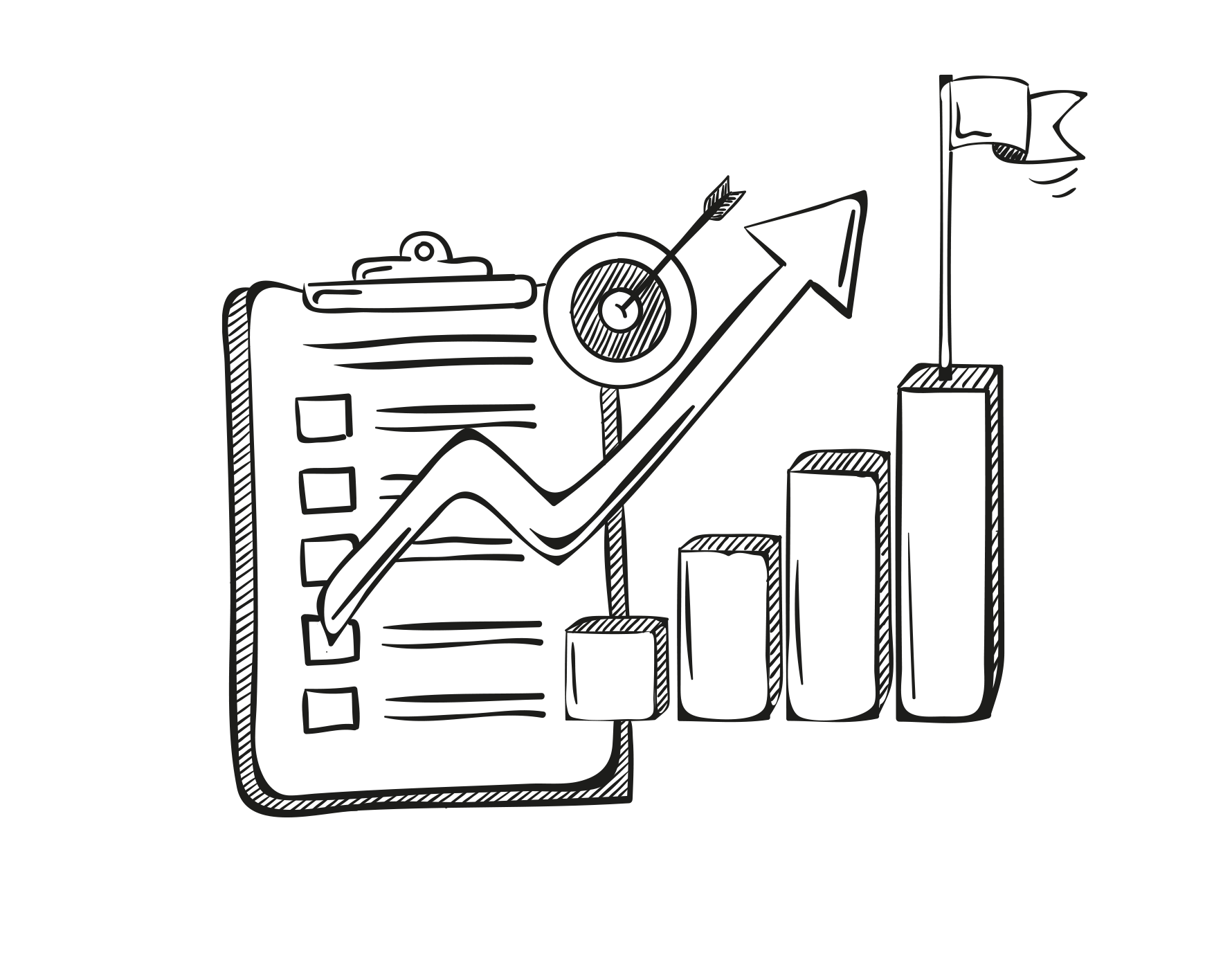
Method 3: Using checklists correctly

Most organisations have checklists, but they are only partially used. The key question is whether a checklist serves a bureaucratic purpose or genuinely supports thinking. Many are created for audits or reviews – for someone else. Far more useful are checklists that genuinely help staff in their daily work. This increases the likelihood they will actually be used.

Method 4: Poka yoke – making errors impossible

Poka yoke aims to eliminate errors before they can occur. This can include mandatory fields, dropdown selections, standardised inputs or technical restrictions that prevent incorrect actions. Armin illustrated this with a simple example: you can only start your car with the correct car key. Your house key doesn’t fit into the ignition – it simply cannot start the car.

Bringing quality to light

Prozessmanagement Digitalisierung und Automatisierung

Bringing quality to light

Method 5: Quick process visualisation

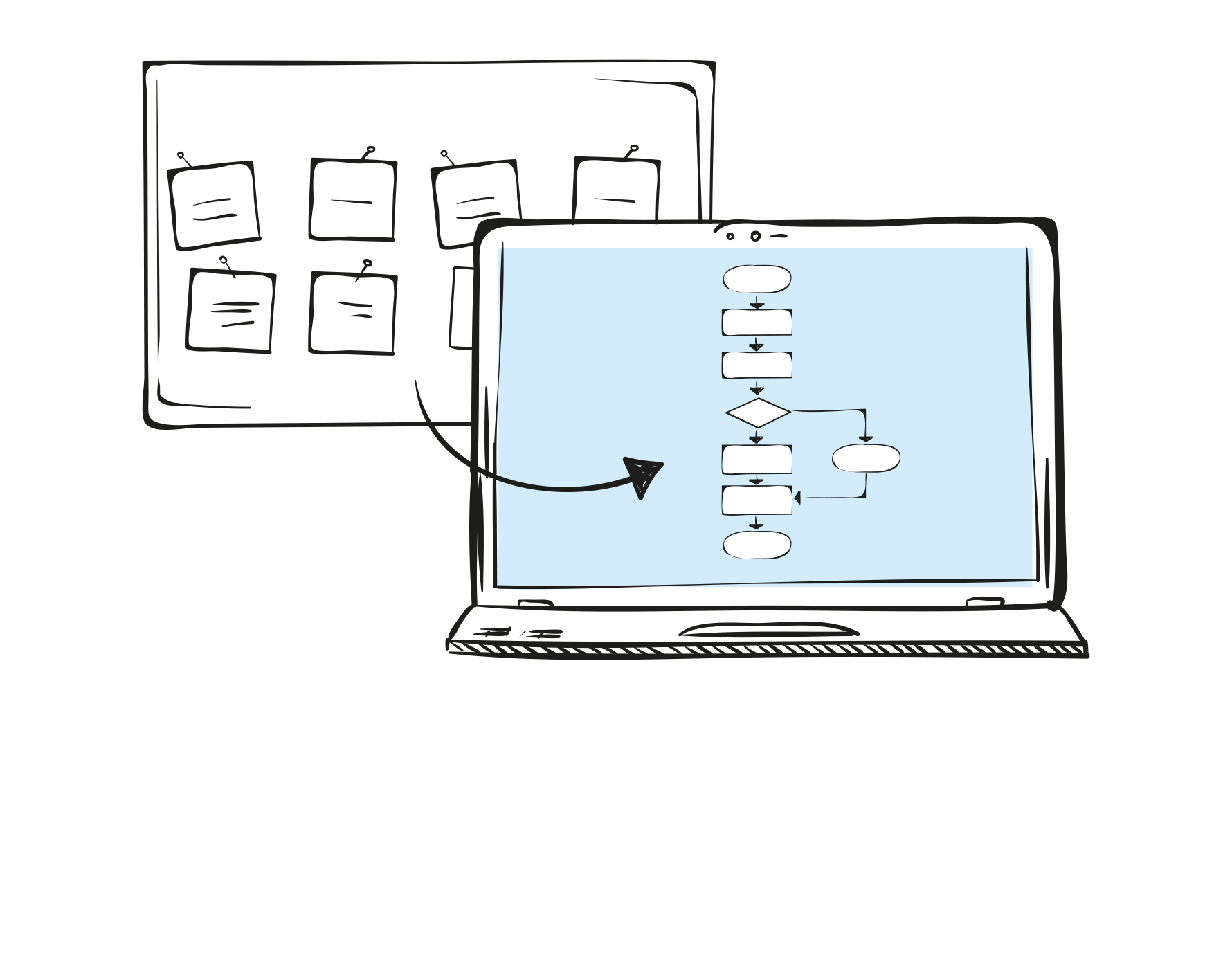
Many quality issues arise from unclear or non-transparent processes. Quick process visualisation helps make a process’s essential steps visible. Originally called the “process minimal image”, Armin noted that thanks to current technology, we can now go far beyond a minimal sketch within seconds.

Even a simple process image can create shared understanding. You don’t need to be a quality management expert or process modeller. Armin demonstrated live how the AI tool Patchley can turn a simple text or voice input into a process diagram in seconds.

Visualising your own work processes

In the second group session, participants tried out quick process visualisation with Patchley themselves. Without prior methodological knowledge, they mapped complex processes such as software development, procurement and approval workflows, or medical tasks – as well as simple everyday processes like refuelling or washing a car. The AI visualised not only linear sequences but also approval loops, decision points and other logical structures.

The group then discussed limitations and conditions. The free version offers only limited editing options, and data protection requirements may restrict use in certain organisations. Nevertheless, all agreed that the tool is easy to use in workshops and that the generated diagrams are extremely helpful as first drafts.

Small steps with big impact

The event made clear that effective quality management does not emerge from thick process manuals or complex goal definitions. It emerges where people work together every day. Communication, clarity and shared process understanding are key quality indicators across all industries.

The aim of this work smarter event was to show how simple operational quality assurance can be. The methods presented were deliberately designed to be low‑threshold so they can be integrated directly into everyday work, regardless of role, sector or prior experience.

Our conclusion of the evening: Quality is not a project – it is a series of good, simple decisions.

Become part of the work smarter community!

Would you like to join the next event? Register now for our upcoming work smarter session. We look forward to seeing you!
Our range of process management trainings

Inhouse Training
Compact Course in Process Management
Price on request
Vienna
German
Komplexe Abläufe transparent gestalten und steuern? Mit Prozessmanagement!
Free of charge
German
Einstieg ins Prozessmanagement
€ 720,-
excl. VAT
German
KI im Prozessmanagement
€ 1.290,-
excl. VAT
Vienna
German
BPMN 2.0 best practice
€ 720,-
excl. VAT
German
Info-Session zur TÜV Austria Process Manager oder Senior Process Manager – Zertifizierungsvorbereitung
Free of charge
German
TÜV Austria Process Manager oder Senior Process Manager – Zertifizierungsvorbereitung
€ 960,-
excl. VAT
German